If you’ve recently had a baby, you’ve likely been told to “just do your Kegels.” While Kegel exercises can play a role in postpartum recovery, they’re far from the whole picture.
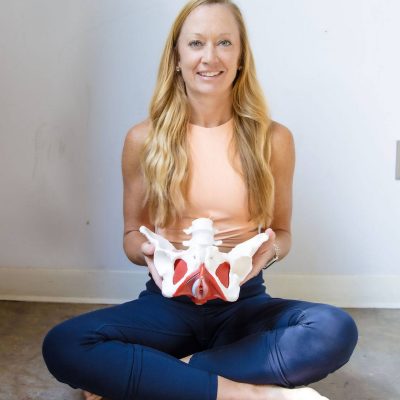
The postpartum body has experienced profound physical, hormonal, and emotional changes—and recovery requires more than tightening one group of muscles. As a pelvic floor physical therapist, I often help new moms reconnect with their bodies in ways that go beyond strengthening—focusing on breath, mobility, and awareness to restore confidence, comfort, and function.
Why Kegels Aren’t the Whole Story
Kegels target the contraction phase of the pelvic floor—the “squeeze” that supports continence and stability. But true pelvic health depends on both strength and suppleness.
After pregnancy and delivery (vaginal or cesarean), the pelvic floor muscles may be lengthened, inhibited, or even overactive from guarding and compensation. Jumping straight into repetitive contractions without restoring coordination and relaxation can reinforce imbalance rather than resolve it.
Just as you wouldn’t strengthen a shoulder without first restoring full range of motion, your pelvic floor needs mobility, circulation, and neuromuscular connection before it can regain power.
- Breathing: The Foundation of Pelvic Recovery
Your breath is one of the most powerful—and underused—tools for healing postpartum.
The diaphragm (your main breathing muscle) and the pelvic floor are deeply connected. When you inhale, the diaphragm descends, and the pelvic floor lengthens slightly to accommodate pressure. As you exhale, both gently lift and recoil.
This natural rhythm helps restore coordination, promote circulation, and reduce tension. Unfortunately, many new moms develop “breath-holding” or shallow chest breathing patterns from stress, core weakness, or discomfort after birth.
Try This: The 360° Breath
- Sit or lie comfortably, hands on your ribs.
- Inhale through your nose, feeling your ribs expand outward and your lower belly and pelvic floor soften.
- Exhale through your mouth, feeling the gentle lift through your lower abdomen and pelvic floor.
Practicing this 5–10 times a day helps reconnect your breath and pelvic floor, preparing the body for more advanced strengthening later.
- Mobility: Making Space for Recovery
The pelvic floor doesn’t work in isolation—it’s influenced by your hips, spine, and even your feet. Limited mobility in these areas can create compensations that strain the pelvic muscles.
After pregnancy, the pelvis and ribcage alignment often shift. Hip tightness, back stiffness, or altered posture from nursing or carrying your baby can make it harder for your pelvic floor to function efficiently.
Gentle mobility work—like hip openers, spinal rotations, and thoracic extension—helps restore balance and ease. Think of it as creating space for your muscles to move again, rather than just asking them to contract.
Try This: Supported Hip Rock
- Start on hands and knees with a pillow under your belly for comfort.
- Inhale as you shift your hips back slightly toward your heels, feeling your pelvic floor expand.
- Exhale as you return to center, noticing the gentle lift of the pelvic floor.
This simple movement encourages coordination, blood flow, and awareness—all key to healing.
- Connection: Rebuilding Awareness and Trust
Many new moms tell me, “I just don’t feel connected to my body anymore.” This sense of disconnection is incredibly common after birth—whether from fatigue, scar tissue, pain, or simply the focus of caring for a newborn.
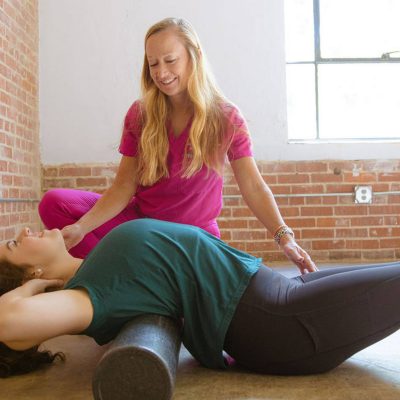
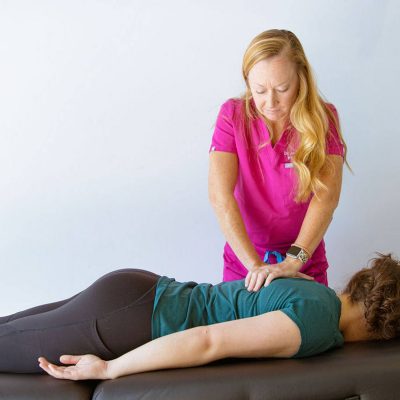
Pelvic floor therapy is about restoring that mind-body connection. Through education, gentle hands-on work, and guided movement, we help you feel your body again—learning when to relax, when to activate, and how to move with confidence.
Connection also means honoring what your body has been through. It’s not about “bouncing back,” but about reclaiming strength and function at your own pace.
- Beyond the Pelvic Floor: Core and Whole-Body Integration
True pelvic recovery involves the whole system—your abdominal wall, glutes, back, and breathing muscles all work together.
As your therapist, I look at:
- Diastasis recti healing and core coordination
- Postural alignment and ribcage mechanics
- Functional movement retraining (like lifting, carrying, or returning to exercise)
- Gentle reintroduction to impact or high-intensity activity once foundational control is restored
When your core and pelvic floor work in harmony, you’ll notice better stability, less leaking, and improved comfort during daily movement and exercise.
- Compassion & Patience in Healing
Postpartum recovery isn’t linear—and it’s not a race. Whether you delivered six weeks or six years ago, it’s never too late to reconnect with your pelvic health.
You deserve more than a checklist of Kegels. You deserve a recovery plan that respects your whole body—your breath, your movement, your emotions, and your story.
The Takeaway
Healing your pelvic floor after childbirth means so much more than strengthening—it’s about reconnecting. Through breathwork, mobility, and mindful movement, you can restore balance, confidence, and comfort from the inside out.
If you’re experiencing leaking, heaviness, pain, or just feel “off” after having a baby, pelvic floor physical therapy can help you move, feel, and live better again—beyond Kegels.