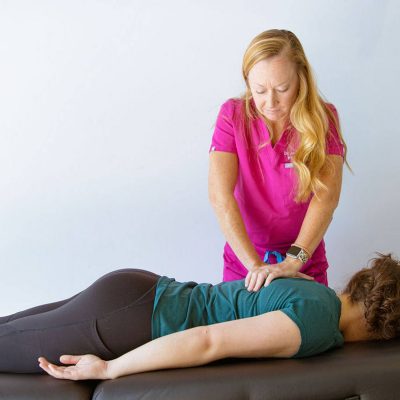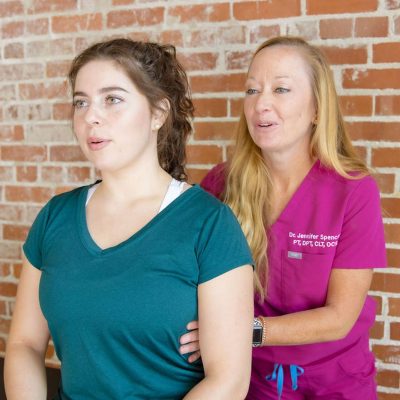
Pelvic pain can feel like a never-ending mystery. You’ve seen the doctors, passed all the tests, and maybe even tried medications but the pain persists. It’s exhausting, confusing, and sometimes even isolating. So what’s going on? What many people don’t realize is that pelvic pain doesn’t always come from the pelvic floor itself. The pelvis is a hub of muscular, neurological, and joint-based connections and sometimes, the real culprit lies outside the pelvis entirely. That’s where Pelvic Floor Physical and Occupational Therapy comes in. PF PT/OT looks at the whole person from the way you breathe to how you move, sit, or hold stress in your body. We’re trained to recognize patterns that other health professionals may miss, helping to uncover hidden sources of pelvic pain.
Here are four often overlooked conditions that refer pain to the pelvic region, and how Pelvic Floor Therapy can help:
- Maigne’s Syndrome AKA Thoracolumbar Junction Syndrome
This sneaky condition stems from irritation caused by irritation at the T12–L1 spinal segment, the junction between the thoracic and lumbar spine. When these nerves are irritated, they can send pain signals to the lower abdomen, groin, or pelvic crest, mimicking pelvic floor dysfunction. Patients often report burning, sharp pain in the lower abdomen or groin, tenderness over the iliac crest, or skin sensitivity in the flank area.
PF PT/OT can help by:
➔ Joint Mobilization: Reduces irritation at the thoracolumbar junction.
➔ Breath and Posture Retraining: Reduces spinal compression linked to faulty breathing or alignment.
➔ Soft Tissue Work: Addresses tension in muscles like the QL and diaphragm that can exacerbate nerve irritation.
- Abdominal Wall Trigger Points
Trigger points in the abdominal muscles, especially in the rectus abdominis, obliques, or transverse abdominis can refer deep aching or burning pain to the bladder, pubic bone, or pelvic floor. These may be activated by scars from surgery, chronic coughing, digestive stress, or poor posture. Patients often report lower abdominal pain, aching near the bladder, or pelvic pressure without pelvic floor muscle weakness.
PFPT can help by:
➔ Myofascial Release: Reduces trigger point sensitivity and restores tissue mobility.
➔ Diaphragmatic Breathing: Enhances core coordination and reduces abdominal tension.
➔ Core Activation Training: Re-establishes proper timing between the core and pelvic floor muscles.
- Spinal Myofascial Trigger Points
Trigger points in the muscles along the lumbar spine like the quadratus lumborum or multifidus can refer pain to the pelvis, sacrum, or even the perineal region. Patients may describe shooting or aching pain into one side of the pelvis, buttocks, or inner thigh, often described as “deep, stubborn pain” that worsens with prolonged sitting or certain spinal movements.
PFPT can help by:
➔ Trigger Point Release & Dry Needling: Reduces localized muscle tension and neural irritation. ➔ Spinal Mobility Techniques: Restores movement and softens compensatory patterns.
➔ Functional Strengthening: Supports balanced movement through hips and spine to prevent recurrence.
- Adductor Tendinopathy or Strain
The adductor muscles of the inner thigh attach at the pubic bone, making them a common but overlooked source of pelvic pain when strained or overloaded. This is often seen in athletes, postpartum parents, or anyone with hip instability. Symptoms may include pain in the groin with activity, tenderness near the pubic bone, or pain with squeezing the legs together.
PFPT can help by:
➔ Manual Therapy: Reduces tension and promotes healing in the adductors and surrounding tissues.
➔ Hip Stabilization Exercises: Enhances balance between the adductors, pelvic floor, and gluteal muscles.
➔ Pelvic Floor Coordination: Restores pelvic stability during movement, reducing compensatory strain.
Why PF PT/OT Is the Missing Link
Pelvic floor physical and occupational therapists don’t just treat the pelvic floor, we assess the entire kinetic chain, looking for movement patterns, muscular imbalances, or nerve referrals that may be the true source of pelvic pain. By addressing these underlying contributors, Pelvic Floor Therapy restores both comfort and confidence.
You Don’t Have to Live with Pelvic Pain
If you’re dealing with mysterious or chronic pelvic pain even after multiple medical evaluations, pelvic floor therapy can offer new insights and real relief. The answer is often not where you think… and a pelvic PT/OT is trained to help you find it. Ready to explore what’s really going on? Let us help you connect the dots and reclaim your comfort.