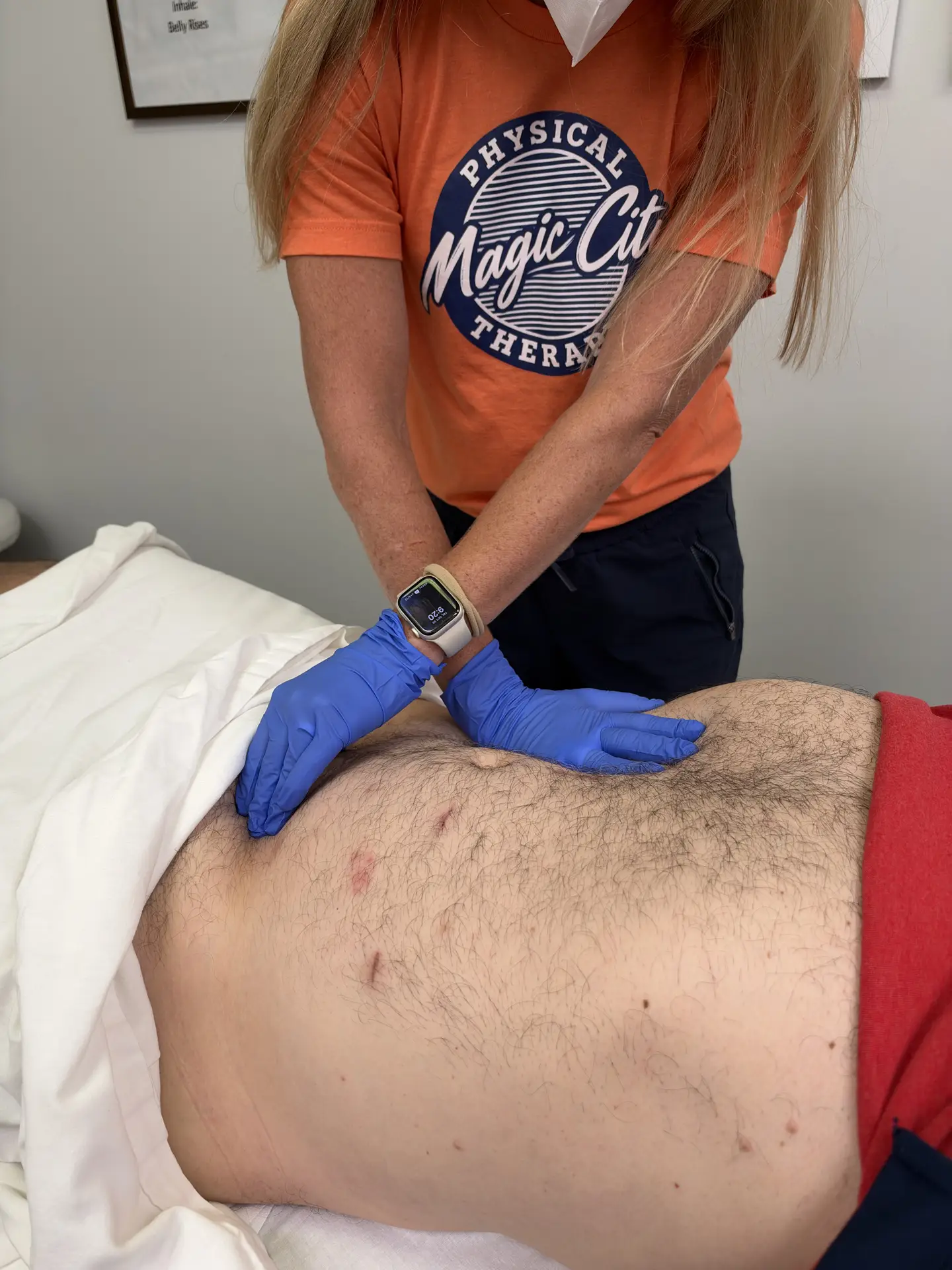
After prostate surgery, you may be told to start doing Kegels to help regain bladder control. You might receive a handout, watch a video, or search online for the best pelvic floor exercises for men.
But what happens when you’re doing your exercises consistently and still experiencing urinary leakage?
Perhaps you aren’t sure whether you’re contracting the right muscles. Maybe you leak when standing, coughing, lifting, or exercising, even though you’ve been doing Kegels for weeks. Or perhaps you’re wondering whether something other than your pelvic floor muscles is contributing to the problem.
If this sounds familiar, you may be wondering whether pelvic floor physical therapy (PT) or occupational therapy (OT) offers something different from doing Kegels on your own.
The answer is yes. Kegels can be an important part of recovery, but urinary control involves more than pelvic floor strength alone. Individualized pelvic floor therapy helps identify the factors contributing to your symptoms and develops a treatment plan based on how your body functions as a whole.
At Magic City Physical Therapy in Birmingham, Alabama, our pelvic health PTs and OTs help men address urinary leakage after prostatectomy with treatment tailored to their symptoms, recovery, and goals.
What Do Kegels Actually Do After Prostatectomy?
Kegels are exercises designed to improve the strength and control of the pelvic floor muscles. These muscles work alongside the urinary sphincter to help maintain continence and manage pressure during everyday activities.
During prostatectomy, structures involved in urinary control can be affected. As you heal, pelvic floor muscle training may help improve your ability to activate these muscles and coordinate their activity during movement.
For example, your pelvic floor needs to respond appropriately when you cough, sneeze, stand up, lift something, or exercise. Improving muscle strength, endurance, and coordination may help reduce leakage during these activities.
The American Urological Association (AUA) recommends offering pelvic floor muscle training to men seeking treatment for post-prostatectomy incontinence.
However, effective training involves more than completing a certain number of repetitions. Technique, timing, muscle coordination, and appropriate progression all matter. Just as importantly, pelvic floor weakness isn’t the only possible reason you’re experiencing urinary leakage.
The Limitations of Doing Kegels on Your Own
Kegels can be valuable, and some men learn to perform them correctly through preoperative instruction or guidance from their healthcare provider. However, exercising independently can leave important questions unanswered.
1. You May Not Be Contracting the Right Muscles
One common challenge is identifying the pelvic floor muscles and performing a proper contraction.
Some men compensate by squeezing their buttocks, tightening their inner thighs, holding their breath, or bearing down instead of lifting the pelvic floor. Others have difficulty fully relaxing the muscles between contractions.
If you’re not activating the intended muscles effectively, or you’re creating excessive tension, you may not get the results you’re hoping for.
A pelvic health therapist can help you identify the appropriate muscles, evaluate your technique, and provide feedback to improve control.
2. You May Be Doing Too Many—or Too Few—Exercises
It’s easy to assume that more Kegels will produce faster results. However, excessive repetitions can contribute to muscle fatigue, while an inadequate training stimulus may limit progress.
The appropriate exercise dosage depends on your current function, endurance, coordination, and ability to relax between contractions.
A therapist can help determine how many repetitions to perform, how long to hold each contraction, how much rest you need, and when to progress your program.
3. You May Have Strength but Lack Coordination
Not all urinary leakage is simply a strength problem.
You may be able to contract your pelvic floor while lying down but struggle to maintain bladder control when standing, walking, or lifting. This may reflect difficulty coordinating muscle activation with breathing and changes in abdominal pressure.
Pelvic floor therapy can help bridge the gap between performing an exercise in a controlled position and using that muscle control during real-life activities.
4. Other Factors May Be Contributing to Your Leakage
The pelvic floor is part of a larger system that helps maintain urinary control. The urinary sphincter, abdominal muscles, diaphragm, hips, spine, and nervous system all contribute to how your body manages pressure and coordinates movement.
For example, difficulty coordinating breathing with pelvic floor activation may affect your ability to control leakage when coughing, lifting, or exercising. Movement patterns, mobility limitations, and abdominal muscle coordination may also be relevant to your symptoms.
Other factors can influence urinary symptoms, too. Bladder irritation, caffeine, fluid intake, constipation, certain medications, and other medical conditions may contribute to urgency or frequency. Following prostatectomy, the degree of recovery of the urinary sphincter is also an important consideration.
This means that even if you perform Kegels correctly, strengthening your pelvic floor alone may not address every factor contributing to your leakage.
A comprehensive evaluation helps identify which factors may be relevant to your individual situation and whether additional medical assessment is appropriate.
5. You May Not Know What to Do When Progress Stalls
Urinary control often improves gradually after prostatectomy, but recovery varies. If leakage persists despite consistent exercise, it can be difficult to determine whether you need a different technique, a more challenging program, additional treatment, or medical follow-up.
A pelvic health therapist can assess your progress, adjust your program, and help determine appropriate next steps rather than having you repeat the same exercises indefinitely.
What Does Pelvic Floor Therapy Offer That Kegels Alone Don’t?
Pelvic floor PT and OT take a more comprehensive approach to urinary control. Rather than focusing exclusively on repetitions, your therapist evaluates how your pelvic floor functions and how your symptoms relate to breathing, movement, bladder habits, and daily activities.
Individualized Pelvic Floor Assessment
Your evaluation may include a discussion of your surgical history, urinary symptoms, pad use, exercise routine, and recovery goals.
Your therapist may assess pelvic floor muscle function, breathing mechanics, abdominal coordination, posture, hip mobility, and movement patterns.
When appropriate and with your informed consent, an internal pelvic floor examination may provide additional information about muscle strength, endurance, coordination, and relaxation. However, an internal examination is not automatically required. Your therapist can discuss assessment options and adapt your care to your preferences and comfort level.
Personalized Exercise Instruction
Your program may include short contractions to improve quick muscle activation, sustained contractions to develop endurance, and appropriate relaxation between repetitions.
As your control improves, exercises may progress from lying down to sitting, standing, and functional activities.
The goal is to match the exercise program to your current abilities rather than follow a generic routine that may not address your specific needs.
Breathing and Pressure Management
Your pelvic floor works with your diaphragm and abdominal muscles to manage pressure within your trunk.
Learning to coordinate breathing with movement can be particularly helpful if you leak when coughing, lifting, bending, or exercising.
Your therapist may teach you to gently activate your pelvic floor before and during activities that typically cause leakage. This strategy, commonly called the Knack, can help you practice using your pelvic floor when you need it rather than keeping it contracted throughout the day.
Whole-Body Movement and Functional Training
Because urinary control depends on more than the pelvic floor alone, treatment may also address relevant mobility limitations, abdominal coordination, posture, and movement mechanics.
Depending on your symptoms and goals, therapy may incorporate walking, sit-to-stand movements, lifting mechanics, exercise modifications, and strategies for returning to work or recreational activities.
Your therapist can help you apply the skills you’re learning to daily life while respecting any postoperative restrictions from your surgeon.
Bladder and Bowel Education
Bladder habits, fluid intake, caffeine, and constipation may influence urinary symptoms in some men. Your therapist can help you identify relevant habits and develop practical strategies to support bladder function.
If your symptoms suggest that another medical issue may be contributing, your therapist can recommend discussing those concerns with your healthcare provider.
Not every man will need every component of treatment. Your plan should reflect your examination findings, medical history, symptoms, and goals.
Is Pelvic Floor Therapy More Effective Than Doing Kegels Alone?
Pelvic floor muscle training is recommended for men seeking treatment for post-prostatectomy incontinence. Working with a qualified pelvic health therapist provides an opportunity to learn proper technique, individualize your exercise program, and address contributing factors that may not be apparent when exercising independently.
However, outcomes vary, and supervised therapy does not guarantee faster or complete recovery for every man. Some men benefit from structured instruction early in recovery, while others seek therapy because leakage persists despite performing exercises on their own.
The value of therapy is that it provides an opportunity to evaluate your specific situation and adjust your treatment based on your findings and progress.
If you’ve been doing Kegels consistently without improvement, that doesn’t necessarily mean pelvic floor exercises won’t help. It may mean your program needs to be reassessed or that additional factors need to be addressed.
When Should You Consider Pelvic Floor PT or OT After Prostatectomy?
Consider discussing pelvic floor therapy with your healthcare provider if:
- You’re unsure whether you’re performing Kegels correctly.
- You continue to leak during coughing, standing, walking, lifting, or exercise.
- You’re not seeing meaningful improvement despite consistent exercise.
- You experience muscle fatigue or difficulty relaxing between contractions.
- You’re limiting work, exercise, travel, or social activities because of urinary leakage.
- You suspect that breathing, movement, bladder habits, or other factors may be affecting your recovery.
- You want guidance on returning to normal activities after surgery.
You don’t have to wait until leakage becomes severe or persists for years before asking for help. Pelvic floor therapy may be appropriate at different stages of recovery, depending on your surgical instructions and individual needs.
If your symptoms worsen or you develop new concerning symptoms, contact your urologist. Inability to urinate requires urgent medical evaluation.
Pelvic Floor Therapy for Men at Magic City Physical Therapy
At Magic City Physical Therapy in Birmingham, Alabama, our pelvic health physical therapists and occupational therapists provide specialized care for men experiencing urinary leakage after prostatectomy.
We look beyond Kegels alone to understand how your pelvic floor functions within the larger system involved in urinary control. By considering your symptoms, muscle function, breathing, movement patterns, and daily habits, we can develop a treatment plan tailored to your needs.
Treatment may include individualized pelvic floor exercises, breathing and pressure-management strategies, movement retraining, bladder and bowel education, and a progressive home program.
We understand that urinary leakage can affect your confidence, exercise routine, work, travel, and quality of life. Our goal is to provide respectful, personalized care that helps you work toward better bladder control and a more confident return to daily activities.
Take the Next Step Toward Better Bladder Control
Kegels can be an important part of recovery after prostatectomy, but doing them on your own isn’t the only option.
If you’re unsure about your technique, struggling to make progress, or still experiencing leakage, a pelvic health evaluation can help you understand what’s happening and identify strategies that may improve your recovery.
Your urinary leakage may involve pelvic floor strength, coordination, movement patterns, bladder habits, sphincter function, or a combination of factors. Understanding the bigger picture can help guide a more individualized approach to treatment.
Contact Magic City Physical Therapy to learn more about pelvic floor PT and OT for men after prostatectomy in Birmingham, Alabama.
Medical disclaimer: This article is for educational purposes and does not replace individualized medical advice. Recovery after prostatectomy varies. Consult your urologist or healthcare provider about persistent urinary leakage and the most appropriate treatment options for your situation.